
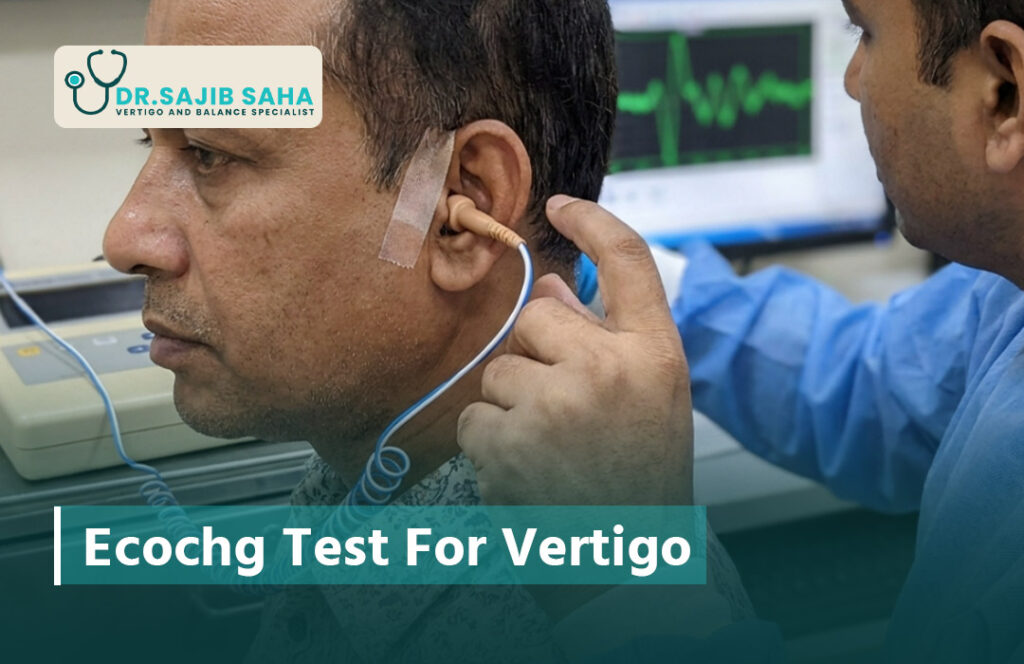
Persistent vertigo, ringing in the ear, and a feeling of fullness are often signs of an inner ear disorder such as Meniere’s disease. Because the inner ear is hidden deep inside the skull, doctors rely on specialized diagnostic tools to see what is really happening. One of the most useful tests for this purpose is Electrocochleography, commonly known as ECochG.
If you have been dealing with recurring vertigo attacks and standard examinations have not given you clear answers, this test may be the missing piece your diagnosis needs.
What Is the ECochG Test
ECochG is a diagnostic hearing test that measures the electrical activity generated by the cochlea, the hearing organ inside your inner ear, in response to sound stimulation. It specifically looks at two signals called the summating potential (SP) and the action potential (AP), and calculates the ratio between them.
An abnormal SP/AP ratio is closely associated with a condition called endolymphatic hydrops, which is a build-up of fluid pressure inside the inner ear. Hydrops is considered the underlying mechanism behind Meniere’s disease, one of the most common causes of episodic vertigo, fluctuating hearing loss, tinnitus, and ear pressure.
How the ECochG Test Works
The procedure is simple and does not require surgery in most cases. During the test:
- A small sticker electrode is placed on your forehead, and soft foil-covered earphones are placed in your ear canals after gentle cleaning.
- A series of clicking or tone sounds is played through the earphones.
- The electrode records the tiny electrical response generated by your cochlea in reaction to each sound.
- The recorded SP and AP waveforms are then analyzed to calculate the SP/AP ratio.
The entire process usually takes less than an hour and is generally well tolerated, with no downtime afterward.
What ECochG Helps Diagnose
While ECochG is best known as a tool for identifying endolymphatic hydrops linked to Meniere’s disease, it can also provide useful information in other conditions, including:
- Perilymph fistula
- Superior semicircular canal dehiscence
- Certain forms of sensorineural hearing loss
It is also sometimes used to help distinguish Meniere’s disease from vestibular migraine, two conditions that can present with overlapping symptoms but require very different treatment approaches. If your symptoms have been difficult to categorize, this comparison can be an important step toward a Meniere’s disease diagnosis and treatment plan or an alternative diagnosis such as vestibular migraine.
How Accurate Is the ECochG Test
It is important to have realistic expectations about this test. Research shows that ECochG has high specificity, meaning it is quite reliable at confirming a healthy ear when the result is normal. However, its sensitivity is more moderate, so a normal result does not always rule out Meniere’s disease, especially in the earlier stages of the condition.
For this reason, ECochG is rarely used in isolation. It works best as part of a complete vestibular assessment that may include audiometry, VEMP testing, and other balance evaluations, combined with your full symptom history.
ECochG Compared to Other Vestibular Tests
Patients are often unsure how ECochG differs from other assessments used for dizziness and balance problems. Here is a quick comparison:
- ECochG measures cochlear electrical activity and is primarily used to detect endolymphatic hydrops linked to Meniere’s disease.
- A VNG test evaluates eye movements to assess how well the inner ear and brain coordinate balance signals.
- A vHIT test measures the vestibulo-ocular reflex to check how each inner ear canal is functioning individually.
- A broader vestibular test for chronic dizziness may combine several of these tools depending on your symptoms.
Because each test measures a different part of the balance system, your specialist may recommend more than one to reach an accurate diagnosis. You can read more about how these assessments compare in our guide to the best balance tests for vertigo.
When Should You Consider an ECochG Test
You may be a candidate for ECochG if you experience:
- Recurring episodes of spinning or rocking vertigo
- Fluctuating hearing loss in one ear
- Tinnitus or a feeling of pressure or fullness in the ear
- Symptoms that have not been clearly explained by earlier tests
If these symptoms sound familiar, an evaluation with a balance disorder specialist can help determine whether ECochG or another diagnostic test is the right next step for you.
Getting an Accurate Diagnosis in Dhaka
Vertigo can have many different causes, and choosing the right test matters just as much as choosing the right treatment. Dr. Sajib Saha offers advanced vestibular testing in Dhaka, including access to diagnostic pathways for Meniere’s disease and other inner ear disorders, so you can move from uncertainty to a clear, personalized treatment plan.
If you have been struggling with unexplained dizziness, hearing changes, or ear pressure, do not wait for symptoms to worsen.
Book an appointment with Dr. Sajib Saha today and take the first step toward an accurate diagnosis and lasting relief.
Frequently Asked Questions
Is the ECochG test painful? No. Most patients describe it as mildly uncomfortable at most, since it only involves an electrode on the skin and earphones in the ear canal.
Can ECochG diagnose Meniere’s disease on its own? Not with complete certainty. It is a strong supporting test, but doctors combine it with your symptom history and other vestibular tests for a definitive diagnosis.
How long does the test take? The test itself typically takes 30 to 60 minutes, and you can resume normal activities immediately afterward.
Do I need to prepare for the test? Your doctor will give you specific instructions, but in most cases, no special preparation is required.